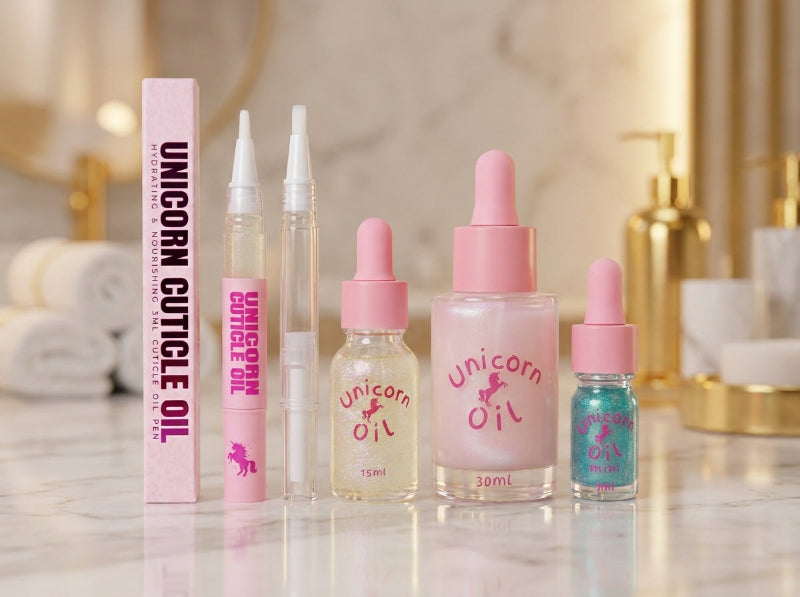
✦ Quick answer: does cuticle oil help acrylic-damaged nails?
Cuticle oil can help condition the cuticle area and improve the look and feel of dry, brittle-feeling nails after acrylic removal. It cannot instantly reverse over-filing or rebuild the nail plate. The damaged section needs time to grow out, but daily oil can support a smoother, more comfortable aftercare routine.
What acrylic nail damage can look like
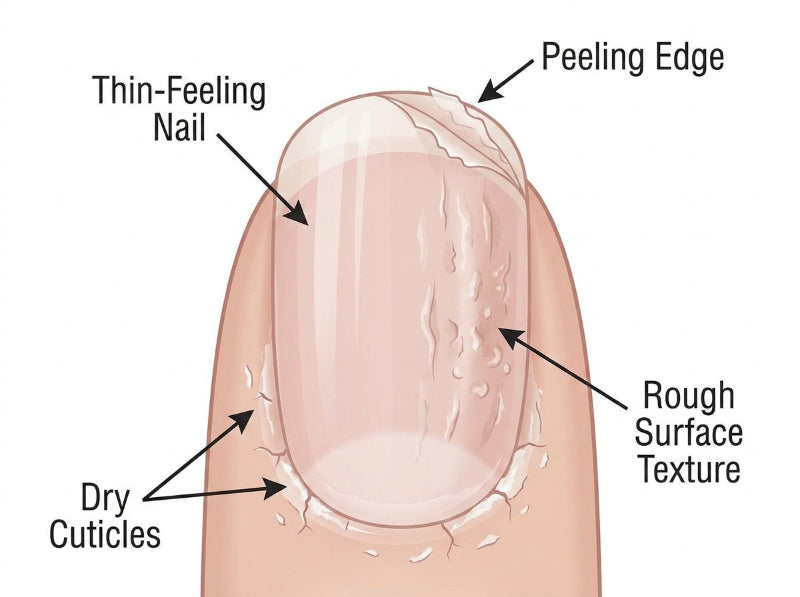
If your nails were prepared or removed aggressively, you might notice one or more of these common visible symptoms:
- ✦ Thin or bendy-feeling nails
- ✦ Peeling at the free edge
- ✦ Rough surface texture
- ✦ Dry cuticles and hangnails
- ✦ Tenderness after removal
- ✦ White patches or surface marks
- ✦ Nails that catch, split or feel weaker than usual
The American Academy of Dermatology (AAD) notes that artificial nails can contribute to brittleness, peeling, and cracking, and the Cleveland Clinic explains that acrylic prep and removal can thin or weaken the top nail plate, especially when nails are roughed up, soaked in acetone, or filed after removal.
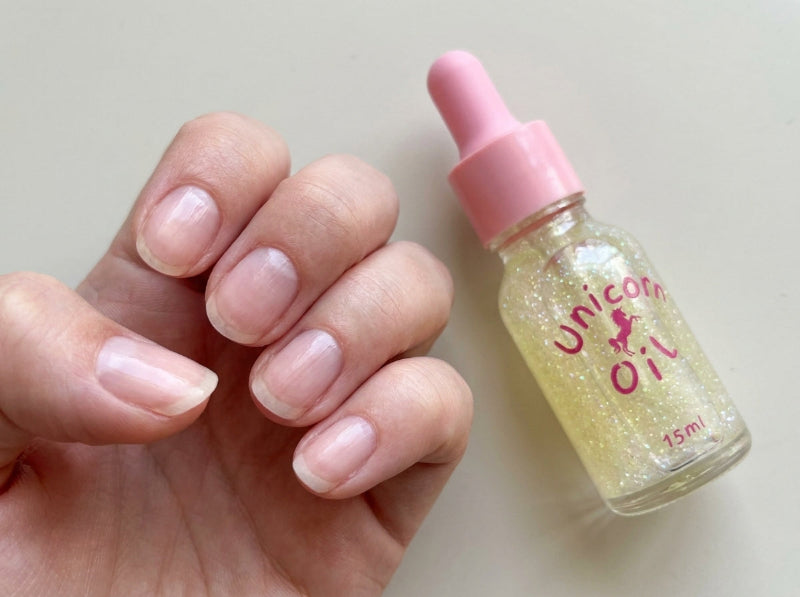
⚠️ Safety & Credibility Notice
If there is pain, swelling, green or black discolouration, lifting from the nail bed, or signs of irritation, seek professional medical advice rather than treating it like normal dryness.
DermNet notes that nail cosmetic allergy can be associated with nail diseases such as paronychia, onycholysis, and nail dystrophy.
Why nails can feel damaged after acrylics
Understanding the root causes of nail wear post-removal is essential for a realistic recovery expectation.
| Cause | What it can do |
|---|---|
| Over-filing before application | Can leave the nail plate feeling thinner or more flexible |
| Harsh removal or picking | Can peel away surface layers of the natural nail |
| Acetone soaking | Can leave nails and surrounding skin feeling dry |
| Filing residue after removal | Can make the surface feel rough or uneven |
| Reapplying too quickly | Can hide the issue instead of letting the nail grow out |
Cleveland Clinic specifically mentions roughing up the nail, acetone soaking, and removal filing as factors that can leave nails dry, brittle, or weakened after acrylics.
What cuticle oil can and cannot do after acrylics
We believe in honest, results-oriented care. Here is a realistic overview of how cuticle oil fits into your post-acrylic recovery:
Cuticle oil can help with:
- ✓ Dry-looking cuticles
- ✓ Brittle-feeling nail edges
- ✓ A cleaner, smoother-looking nail area
- ✓ A daily care ritual while nails grow out
Cuticle oil cannot do:
- ✗ Instantly reverse over-filing
- ✗ Rebuild removed nail layers overnight
- ✗ Treat infection, allergy, or lifting
- ✗ Guarantee stronger nails or faster growth
A simple aftercare routine for nails after acrylics
Keep nails short and smooth
Long, thin nails after acrylics catch on everything. Keep them short while the damaged section grows out.
Do not pick or peel leftover product
Picking leftover acrylic or gel can remove more of the natural nail surface layers.
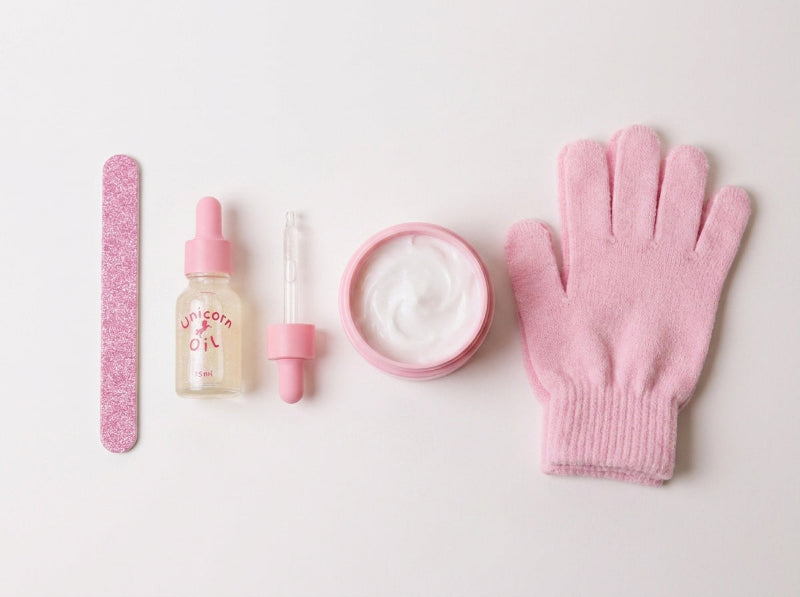
Apply cuticle oil daily
Massage a small amount around the cuticle area and over the surrounding nail area. Focus on consistency rather than flooding the nail with oil once a week and hoping for a quick recovery.
Use hand cream over the top
Oil helps condition the nail plate, but hand cream helps support the surrounding skin barrier. Cleveland Clinic recommends moisturizing between water or hand-sanitizer exposure for brittle nails.
Wear gloves for cleaning and dishes
Water, cleaning products, and repeated hand washing can make brittle nails feel worse. The academic literature also identifies trauma, surface filing, and dehydration from water exposure as triggers that can worsen brittle nails.
How long does acrylic nail damage take to grow out?
Damaged nail plate sections do not usually "repair" in the way skin does. The marked, thin, or peeling section generally needs to grow forward and be trimmed away over time. That is why a realistic post-acrylic routine is about protection, conditioning, and patience, not instant repair.
Cleveland Clinic notes that nails can feel weak or brittle for months after acrylic removal while healthy nail grows enough to replace the damaged section.
Which cuticle oil format is best after acrylics?
Choose the right application method to support your consistency goals.
| Format | Best for | Shop Links |
|---|---|---|
| 3ml cuticle oil pen | Handbag, work, car, on-the-go daily use | Shop cuticle oil pens → |
| 15ml dropper | Bedside daily routine application | Shop cuticle oils → |
| 30ml dropper | Heavy users and long-term routines | Shop larger bottles → |
| Refill bottles | Salons, repeat users, and refilling pens | Shop refills → |